

relational dressing
on getting dressed by others

I’ve spent the last month in Hyderabad (India) visiting my extended family. (If you were wondering why you haven’t heard from me in a minute.) It was such a lovely and rich time and I have so much to share about it! But before I get into it:
Upcoming Events

BIYA BIYA : Mending Party at Eli Tea Bar
Sunday, February 8, 2026, 12:00-2pm | Eli Tea Bar / 5507 North Clark Street, Chicago - Tickets here.
My Nani (mom’s mom) lives in Hyderabad and as I previously mentioned, she is the OG fashion icon. My Nani chooses all her clothes with a careful eye to fabric, texture, color, and pattern. Her wardrobe is widely admired by peers and descendants. Unfortunately, my Nani now has mobility issues that make it difficult for her to lead the rich social life she used to have and her wardrobe is limited to the nightgowns she wears each day. (But I must emphasize, these are not ordinary nightgowns, overseas family members have sourced the fabric for her, because she wants a very specific look and texture).
Nani is very particular, like, very particular. When I visit she stops whatever she is doing (and frankly, whatever I’m doing) — brushing her teeth, physical therapy, anything, really — to ask me to show her what I’m wearing. If not up to her standards, she makes me change. A few days of this trip, she had me change not once or twice, but three times.
One day, first thing in the morning, I was feeling frustrated after another half hour (unsolicited) styling session. This time I only had to take out a third of the closet before my grandmother was satisfied — but she still asked me to take out a few more just to see. I suddenly realized that maybe it wasn’t just about what I wore (although I do think my grandmother just genuinely can’t stand ugliness, which — queen behavior), but about the rehearsal of getting dressed.
Getting dressed is one of my hobbies — and it was my grandmother’s for most of her life, before mobility issues in the last decade made it one she could no longer take part in. Perhaps, to some extent, dressing me was a way to continue to participate in something that gave her joy that she could no longer do. I’ve spent much of the last few years thinking about the processing of dressing oneself and its relationship to identity, ethics, the environment, economics… But I realized for the first time that I had not thought about the meaning of dressing others.
It is common for families in India to live in multi-generational households. My grandmother lives together with her son, her grandchildren, and now her great-grandchildren — four generations in one house. Dressing others is a part of everyday life — my cousins choosing outfits for their children, my aunt asking her daughters which outfit to wear to a wedding, my cousin doing her sister’s makeup, my grandmother’s nurse helping her shower and change her clothes.
Getting dressed is not an individual act, but a communal one. Getting dressed is not just about clothes and in what manner they are worn but by whom they are chosen and put on.
Choosing and putting on one’s clothes is an early act of independence for children and assertion of their individual identity by choosing what they want to wear, what they feel comfortable in, and how they want to present themselves to the world. By letting someone else choose our clothes for us we are offering them the trust of influence over our representation of ourselves.
We are also dressed by others in ways we haven’t necessarily always consented to — by parents, partners, employers, society, and the State. This is vulnerable in a self-conscious, sometimes humiliating, and sometimes torturous way.
I started thinking about communal rituals around dressing. Initially I was thinking specifically about times when someone else physically puts clothes or accessories onto the body. But in thinking about the meaning of dressing someone else, I expanded to thinking about when clothes are chosen for us by others (in both good ways and bad).
Who Tells You What to Wear?
….My Family/Friends/Caregivers
I grew up in a house with two sisters. In college, I lived in a house with five roommates. Sharing a living space and getting ready together has been a part of my life for a long time. I have so much fondness for the times I’d be with a group of people where we’d all be zipping each other up, doing our makeup all in the same bathroom mirror, one person perched on the closed toilet seat, one on the side of the sink putting on mascara, another person in the corner putting on hairspray that made everyone else cough and yell.
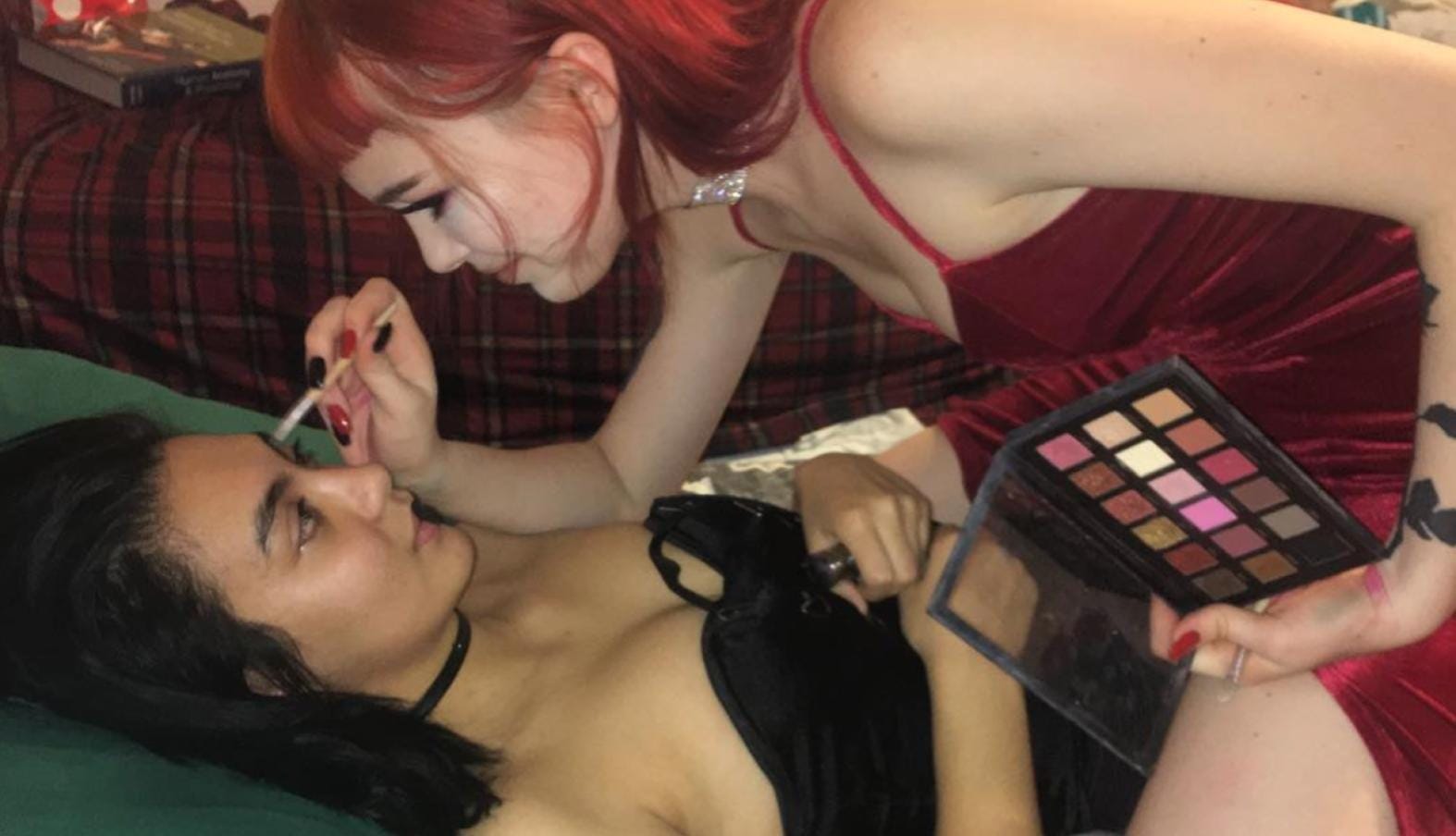
Mundane forms of communal dress reinforce social relationships, like the relationship between parents/guardians and children, in queer community, between friends. They can be forms of building trust and intimacy and a reciprocal construction of the self alongside others in our communities. Think dressing children, dressing the disabled and elderly, trans culture around sharing tools and clothes in the process of learning a new gender presentation.
Everyday dress rituals have elements of teaching behavior (some with more explicit intention than others), for better or worse. They can be spaces of pressure to conform to access belonging or care, especially around gender and ideas of “presentability” (which are often racial).
…Tradition
Think dressing the dead for funerary customs or dressing brides and grooms. The rituals around dressing are community bonding activities and they also mark the significance of the event by the repetition of known cultural rituals. There’s often both private and public performances of dress rituals around cultural events, like weddings.
Private
Helping the bride and groom get dressed is often something done by close friends and family, in American weddings bridesmaids often get ready together.
Semi-private
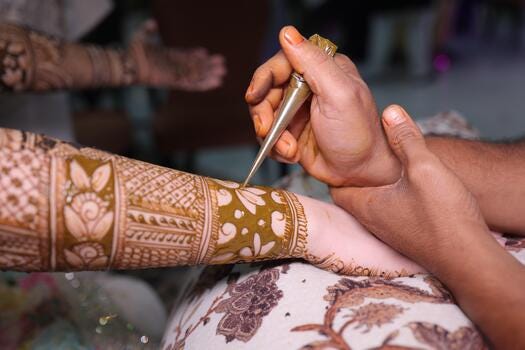
In South Asian weddings, the bride and women in close friends and family gather to have their mehndi (henna) done together
Public
The clothing of the bride or groom is often altered during the wedding ceremony as a form of ritual.
For example:
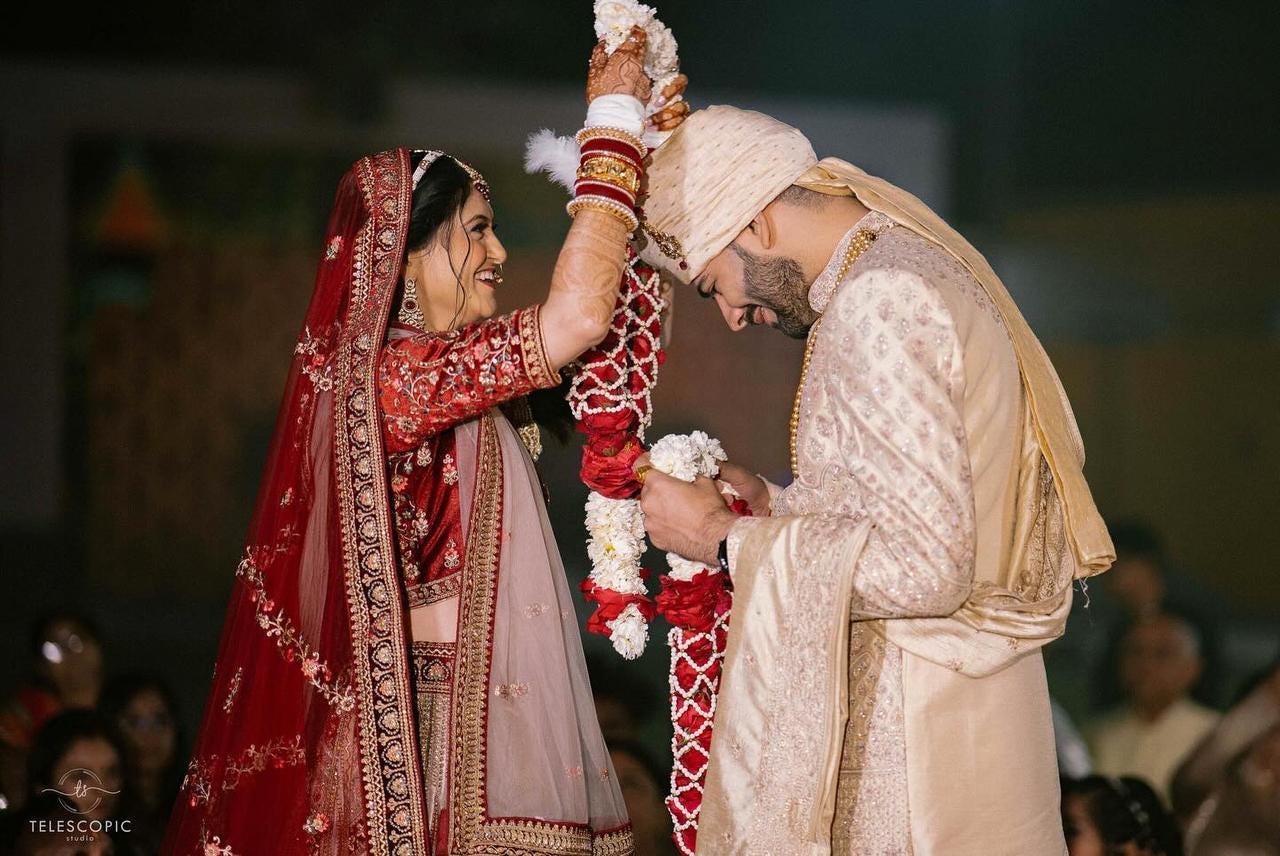
In South Asian weddings, a flower garland is often put around the bride and groom’s necks, sometimes by family or by each other.
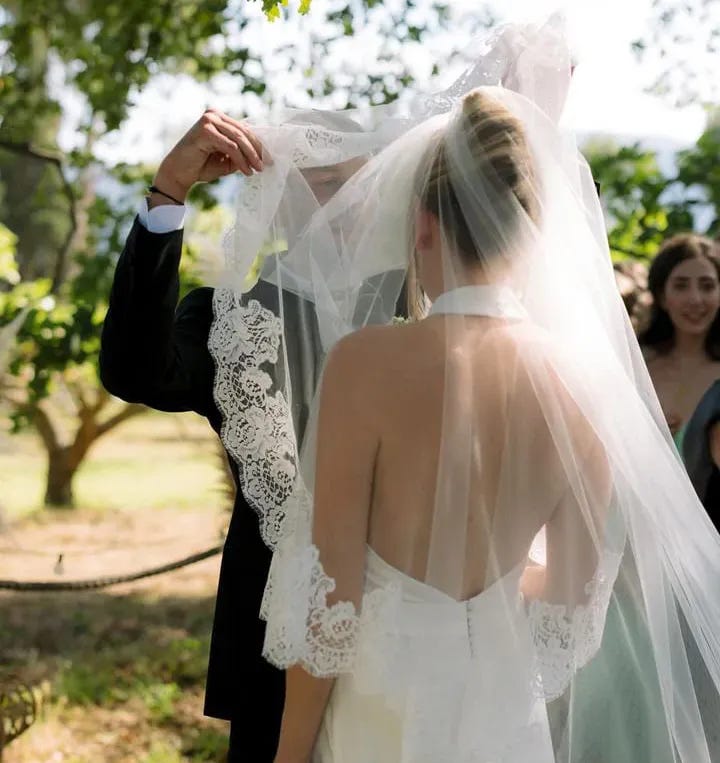
In American Christian weddings, the bride’s veil is lifted at the conclusion of the ceremony.
…Capitalism
In that infamous Devil Wears Prada scene, Miranda Priestly tells Andy’s character that the sweater she was wearing “was chosen by the people in this room.”
The fashion industry on some level decides what we wear because it curates what clothing is available to us — what fabrics, colors, sizes, silhouettes, cuts, and what features (pockets, buttons, zippers). These options also vary by audience. Plus size clothing is less available in general and tends to come in more sober colors and silhouettes. Clothes marketed to women tend to have more synthetic fabrics and less pockets or “useful” features. Clothes marketed to men tend to come in a restricted color palette. And of course, the really cool stuff — clothes with cool details, beautiful fabrics, and expert tailoring — are only available to the wealthy (or the famous).
{As always, the answer is to upcycle, alter, dye, mend your clothes. By creating, instead of consuming, we can have a genuinely unique self-presentation, that becomes a record of our history and our hands.}
…the Government
The Man loves to tell people what to wear in many ways — from prison uniforms to involuntary hospitalization to military uniforms.
Sumptuary Laws
Historically, governments also had something called sumptuary laws, which regulated people’s (usually common people’s) consumption of luxury goods. Essentially, sumptuary laws stopped plebes like us from dripping out so the inbred royalty could look better. Sumptuary laws often restricted certain kinds of people from wearing certain fabrics, colors, or consume goods from certain areas. Sometimes sumptuary laws were about protecting domestic products from trade, but they were usually about maintaining social hierarchy and distinctions, usually by class, birth, and gender.
In Ancient Rome, sumptuary laws prevented common people from wearing purple (an incredibly expensive dye), which was reserved for government officials. Senators were indicated by a purple stripe on their togas.
Islamic Shari’a includes sumptuary laws in which men cannot wear gold.
But of course, no one likes making a bunch of rules that everybody hates more than the British. England has a long history of sumptuary laws starting in the 12th century. Initial sumptuary laws were related to the English Crusaders but general sumptuary laws were passed domestically starting in 1463 by Edward IV. During Elizabeth I’s reign, sumptuary laws in England were expanded. These sumptuary laws restricted certain fabrics like velvet, satin, damask to nobles for the rank of baron and above. They also have some wildly specific rules about how long your hose needed to be and how much lining material you can use in your pants and a particular disgust for double ruffs. Breaking these sumptuary laws could result in confiscation, fine, or imprisonment.
Versailles
Another conceptually different but similarly Weird European Behavior was the incredibly convoluted dress rituals (known as lever at Versailles), in which nobles had the privilege to dress the King and Queen based on their rank. This scene from Marie Antoinette (2006) illustrates the point (based off an actual incident with the real Marie Antoinette).
The relationship between clothes and the body is incredibly intimate, maybe the most intimate relationship we have with objects. Clothes have continuous contact with our bodies over long periods of time. They are our first layer of sensory experience. They are social indicators of who we are and where we belong.
Having our clothes chosen for us then is an act of intimacy and vulnerability, even moreso when someone else puts them on our bodies. I think of the common scene in romance films where the male lead gifts the female lead a necklace and we see him put it around her neck. It’s a sensual moment: the physical closeness and at the same time, restraint, and the connection implied by the permanent physical marker of their relationship.
Watch people talk about their clothes and they often say things like, Does this make me look feminine? Do I look like a man in this? Do I look queer enough? Do I look my age? Do I look like I fit in? Do I look like I belong here?
We think of how we dress as an expression of our individuality. But like our sense of identity, our aesthetic performance develops relationally with others — our families, communities, and societies.
I would love to know how you think about relational dressing in your own life! Are there people that choose your clothes or that you choose clothes for? Are there dress rituals in your culture, wedding or otherwise?