

object permanence
on keeping your clothes forever (or a very, very long time)

Upcoming Events!
Chicago Textile Fair | Saturday, December 13th (11-3PM)
Tickets available here. Come visit my table! I’ll be selling zines and co-tabling with Mirayo de Sol, a fiber artist and educator who does a lot of dye and cyanotype work and workshops! It’ll be a great time.
In the past two years I’ve read a lot of literature about the fashion industry and its catastrophic effects on the environment. Fast fashion and the general trend of mass production of goods for us to consume, consume, consume in commanding higher and higher rates of profitability is destroying our groundwater, stripping our soil, polluting our rivers, and exploiting the labor of predominantly women (and children!) in the Global South.
The alternative is to buy mindfully, shop secondhand, keep and mend what we have, and consume less. Naturally, this means our goal is to keep our clothes, preferably forever (because all clothes exist forever, either as the pants you bought or plastic in a landfill).
Okay, so keep your clothes forever right? But what does that actually look like?
This can feel more approachable if you’re the kind of person who has a specific idea of what they like to wear and generally prefer low-maintenance clothes like cotton t-shirts and jeans. Or if you’re someone who lives a lifestyle that’s low impact on your clothes because you’re generally in clean and controlled environments.
But maybe you’re someone like me, whose preferred fabrics are high-maintenance delicates like silk and cashmere and is kind of a messy eater. Maybe you work outside or in a woodshop or at an elementary school. Maybe your hobbies are gardening or soccer or making jam. Maybe you just like novelty and want your clothes to reflect your shifting interests and ideas of self.
One of my favorite principles of Dialectical Behavioral Therapy is the idea of “radical acceptance.” Radical acceptance is acknowledging the reality of a situation and that our role in it is fundamentally limited, recognizing what is in our control and letting go of what is not. It’s important to learn to care for our clothes as best as we can: laundering them gently, not over-drying them, honoring the fabric and caring for them.
But we also have to come to terms with the knowledge that our clothes are there to aid us in living our lives and they will show signs of that eventually. We can embrace that and allow them to evolve over time, with the marks of our life adding character to them. So in embracing this I thought about principles, strategies, and ideas to look to when struggling with wear, age, and boredom with my clothes.
Your clothes don’t have to look perfect all the time.
In my own journey with my clothes, I’ve realized that fast fashion and mass production have altered our relationship to what clothes should look like. Part of the transition to a slower relationship with clothing is realizing that our clothes cannot and won’t look “new” or “perfect” forever or at all times, no matter how well we take care of them. Life is messy and dirty and prickly.
Stains happen. Holes are not the end of the world.
Maybe you got a stain or a hole and you haven’t had a chance to treat it or fix it yet. You can still wear it, but maybe you can be strategic about how you layer things so they’re not visible.
Or you can cover them up with decorative brooches that add interest to your outfit.


Your clothes can adapt.
Just like our own bodies change and age, our clothes will too. We can let go of the attachment we have to a certain image of our clothes as what they looked like when they were new. Our lifestyles can change as well. We don’t have to preserve our clothes in the state we had them or get rid of them because they don’t work for us. We can change them to suit the life we have now.
Dye your clothes darker colors.
As our clothes age, it’s natural that they may become discolored or stain over time. Maybe you accidentally washed your white shirt with something red and it turned pink and you can’t bleach it back. Or maybe you’re just living a messier life than you were when you bought those white pants and you never reach for them because they’re too much work to keep stain-treating. You can give it a new life by dyeing it a new color.
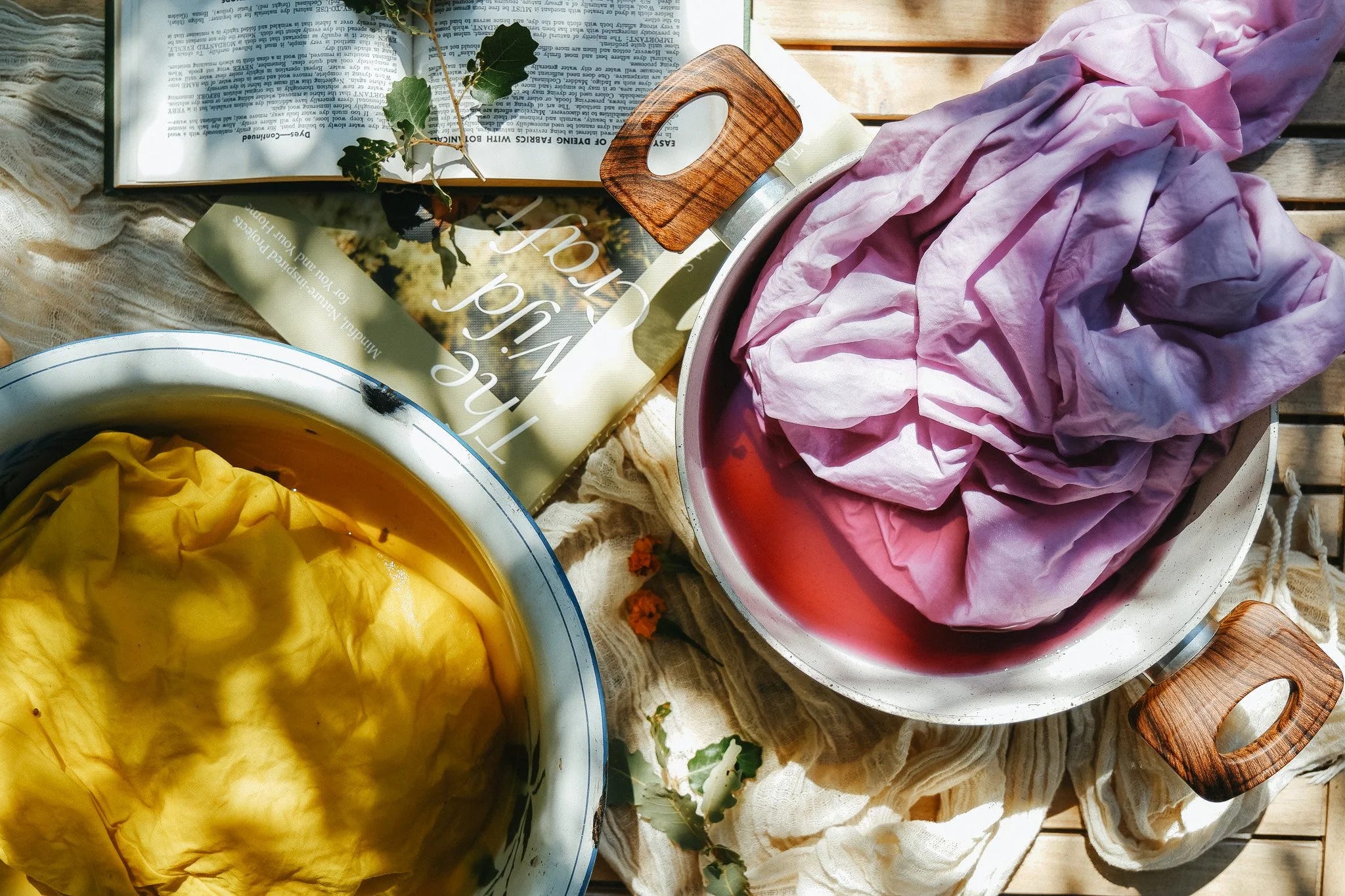
Suay, an incredible textile reuse store, has a Community Dye Bath. You can bring your clothes to get dyed from one of their group of rotating colors or you can mail them in if you’re not local.
You can try dyeing it yourself at home. Rit Dyes are pretty easy to find at craft stores. Jacquard Dyes are apparently good for delicate fibers like silk and wool.
You can also try natural dyeing your clothes using plant material like:
turmeric
onion skins
black beans
avocado pits, etc, etc
Alter your clothes for fit. You can make them more adjustable!
Take your clothes to the tailor and have them altered to fit your changing body (or alter them yourself!) You can also alter your clothes to have a greater range of fit.
For example:
add elastic to your waistbands to give more fit flexibility to jeans or skirts
convert zips to lace-ups
Here’s a tutorial to make the waistband of your jeans bigger by adding elastic or stretch fabric:
Your clothes don’t have to stay the same forever.
Something that is a struggle for me is that I really value novelty. New things in my wardrobe are a muse for my creativity. It’s exciting to think of how to style something new with what I already have. It feels difficult to square the desire for newness with an ethic that is focused on reducing consumption. So I started thinking of all the ways I could give new life to something I already have.
You can change the style.
Your clothes were once just flat pieces of fabric that were cut and sewn to be the shorts or dress or pants that you have now. You can cut them up and make them into something new (or have a tailor do it for you)! Even if you’re not skilled at pattern-making and sewing, or you’re simply not ready to commit to a complicated upcycle, you can make easy changes that have a big impact.
Cutting
removing the sleeves or making them shorter
cutting jeans into shorts
cropping a t-shirt
Adding Details
add zippers to sleeves, sides of pants, in the middle of a shirt (could be operable or not!)
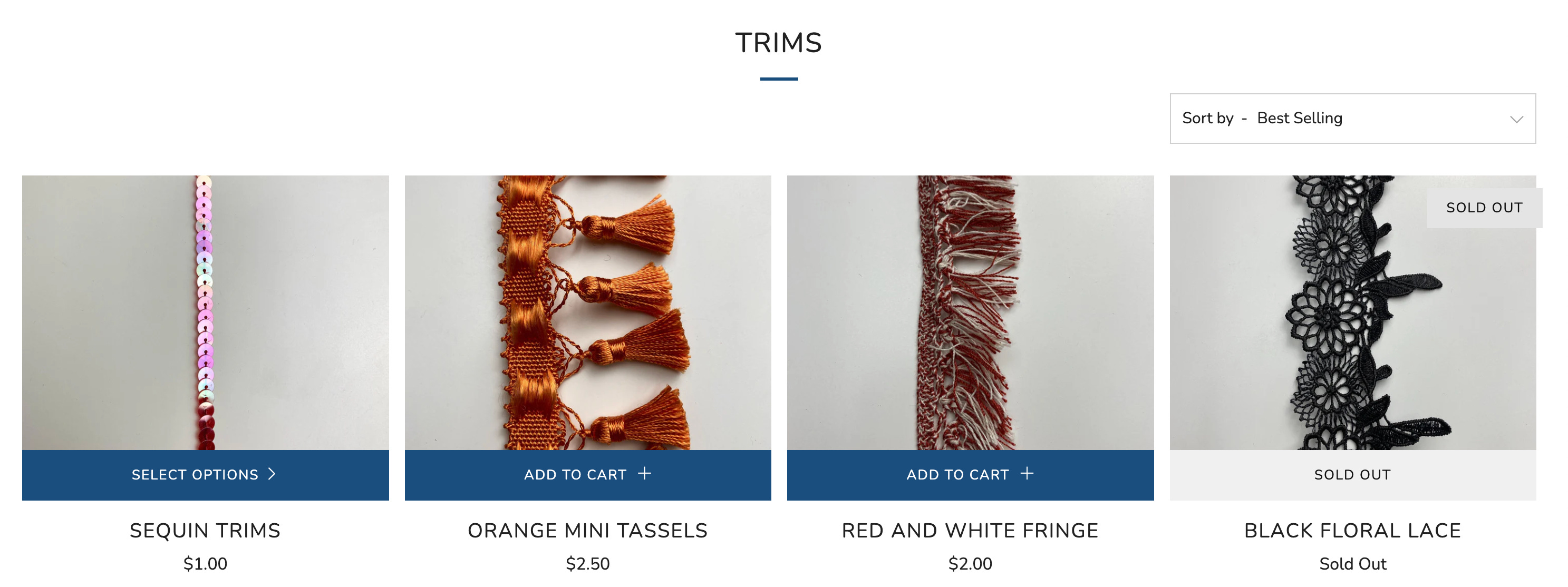
add lace or ribbon to edges or patterned onto a surface
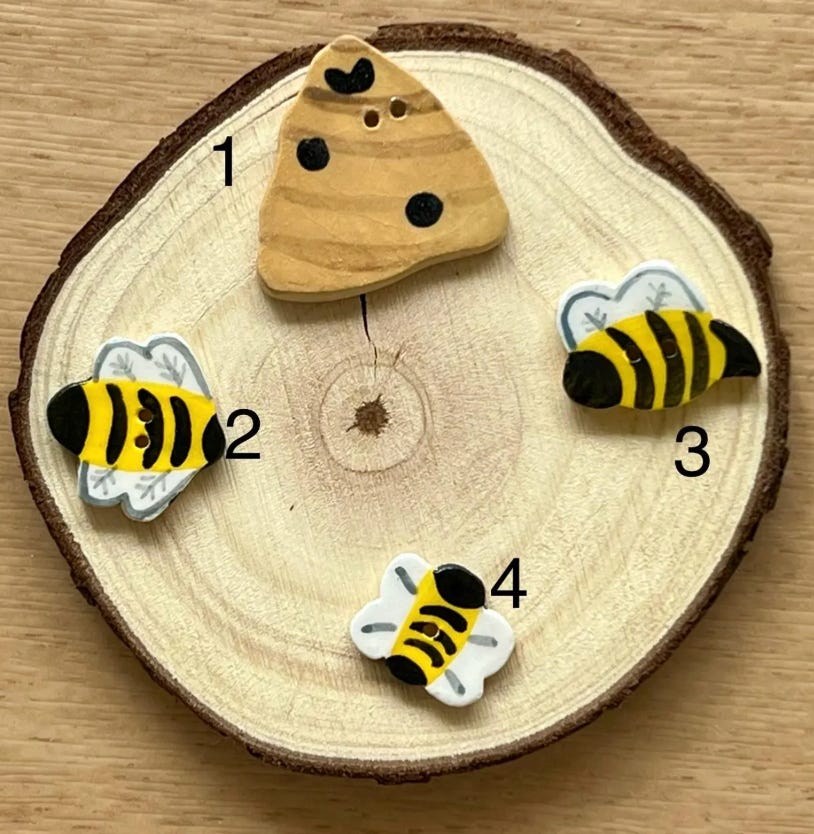
fun buttons
It’s okay to get bored. You can make them more interesting.
Pattern dyeing
There’s a very rich tradition of pattern-dyeing, like cyanotype, shibori, leheriya, and more.


Cyanotype is pretty easy and a fun activity to do with your friends!
Here’s a nice tutorial:
Get Fun Trims and Attach them to Your Hems
Make Your Own Appliques
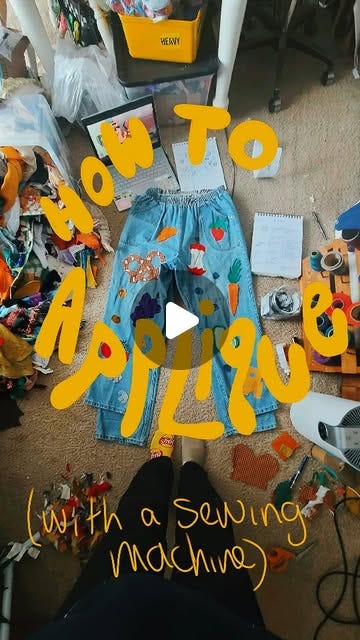
Remember when you were a kid and you did those crafts in art class where you cut up construction paper to make an animal? An applique is that but in fabric. I love this video from this super fun applique fiber artist on instagram.
There’s more to preservation than trying to keep something exactly as it always was, forever. There are things that call for that, but many more things that serve us best by continuing to evolve alongside us and continue to be part of our lives. I hope this inspires you to think of your closet like an ecosystem, rather than a museum. Change is always happening everywhere, all around us, within us, so shouldn’t it be part of our clothes too?
I’d love to hear what you’ve done to extend the life of your clothes or keep them interesting over time!
Love this! I’m hoping to bring more novelty to my existing wardrobe this year and inspired by all these ideas. At the least, this is a good push to re-dye all my faded blacks to black again.