

a pile of "stuff"
on cerulean and incomplete fashion histories

Two years ago I visited the Acropolis Museum in Athens, Greece. It was the last thing I did on a beautiful, restorative trip with my best friend A to Greece that included sightseeing in Athens and several days on the island of Naxos. (In many ways this trip was a turning point for me in my life and my interests.) If you ever have the chance to visit Athens, I highly recommend you see the museum. It is beautifully structured and goes into a lot of detail about ancient Greek life.
As I grow older, I am more and more interested in the beauty and connection present in the mundanity of everyday life. Some of the most interesting parts of the museum were the artifacts found at the base of the Acropolis hill: the everyday objects of Athenian families. There’s a section of the museum that goes into details about tools, household objects, and also: about pigments and the minerals they come from.
Until recently, I didn’t think to think about where the dyes for our clothes came from beyond a nebulous probably berries and plants of some kind? It didn’t occur to me that the pigments used to make dyes would be regionally specific depending on the raw materials needed to make them: plants or animals native to certain parts of the world, that can only live in certain climates or mineral deposits found in specific places because of rocks created millions of years ago.
In the era of synthetic dyes and mass production, it is difficult to think about having a limited color palette of clothing available to wear or only being able to wear a certain color for a particular occasion.
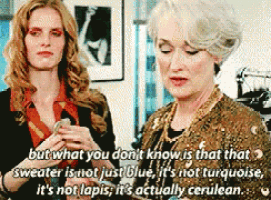
I have always loved this iconic scene from The Devil Wears Prada. (If you haven’t seen it you need to watch the full clip.) Miranda’s analysis only goes back within the scope of the modern fashion industry, situating the sweater in question within the context of the business of the modern fashion industry, but a true historical analysis should go back much further.
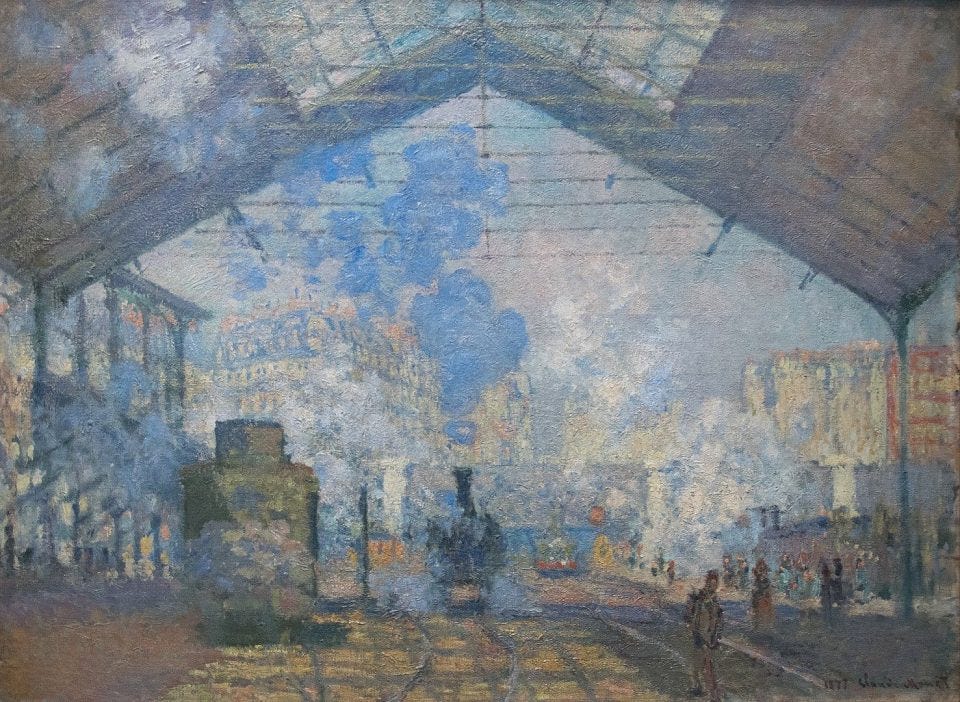
The cerulean of Andy’s sweater is not just indebted to Oscar de la Renta but goes back to the early 19th century; the pigment cerulean was invented by Swiss chemist Albrecht Höpfner in 1805. Cerulean is a synthetic pigment created by making a compound from cobalt and tin oxide (Co2SnO4). Cerulean was a favorite of many Impressionist painters in the 19th century, like Monet and Morisot, and is famously used in Monet’s La Gare Saint-Lazare, 1887. Cerulean blue is also the color of the United Nations logo.
The more I learn about the history of the textile economy, the more meaning this scene takes on for me. Though the conclusion Miranda reaches is that the choices of the public are shaped by the genius of those at the helm of industry, the truth is that the clothes we wear today (and our modern world in general) are shaped by the collective skill, labor, and decisions of many people, most of whose contributions are diminished or erased to perpetuate the myth of the superiority of the West and “merit-based” capitalism.
It’s no surprise that Andy thinks clothing is unimportant or meaningless. Modern capitalism blends histories of textile labor, strips them of their original meaning and makes them available to anyone, anywhere (especially in the Global North). How many of us know how the fabric we wear is even made, let alone the cultural origins of embroidery styles or resist dye techniques?
But the textile economy shaped our system of capitalism and the modern world we live in through wars, slavery and trade — over access to prized fabrics, dyes, and master techniques honed by artisans in specific regions of the world. The clothes we all wear today all trace back to cultural signifiers, indigenous patterns, embroidery styles, and dyes that trace their lineages back hundreds or thousands of years.
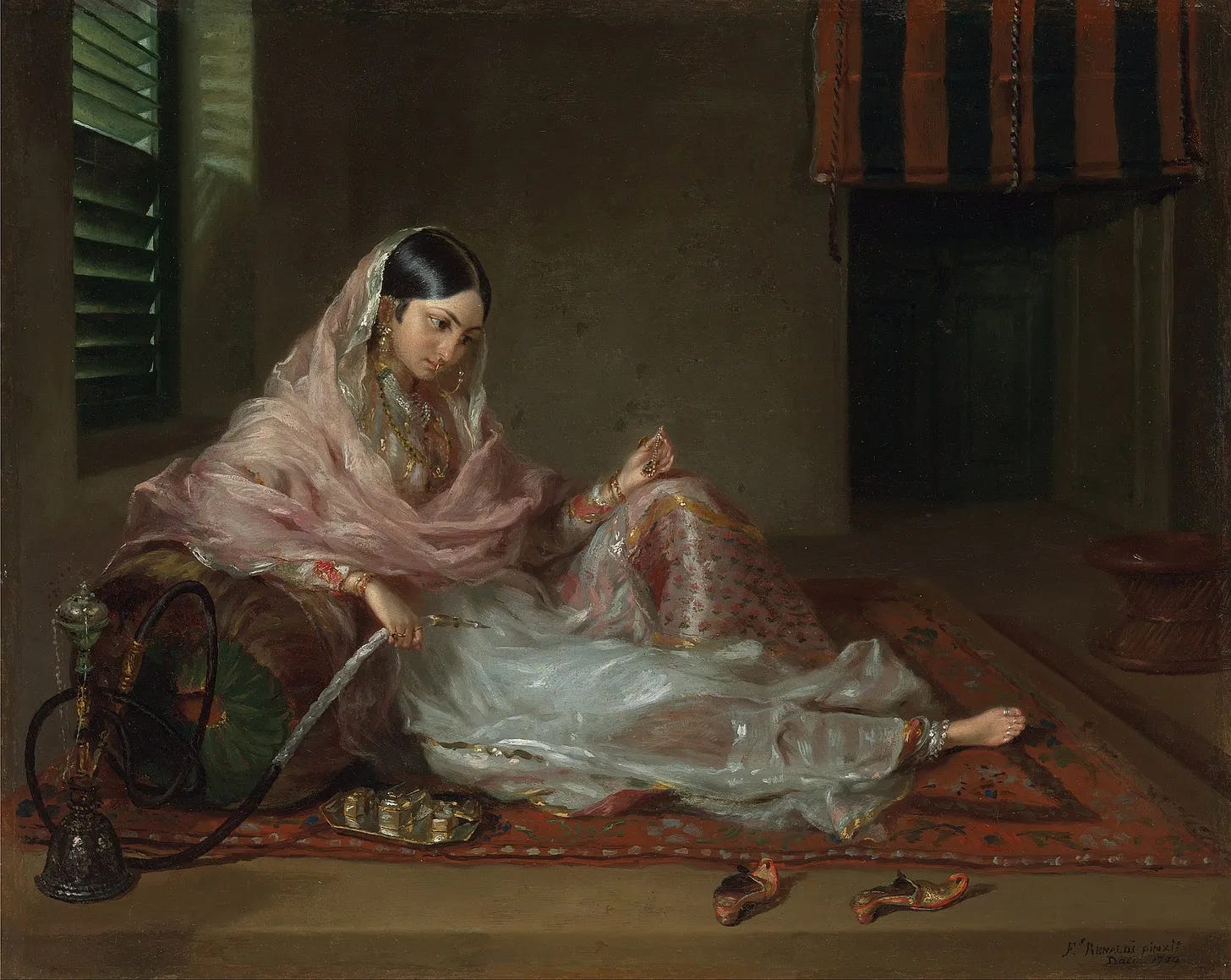
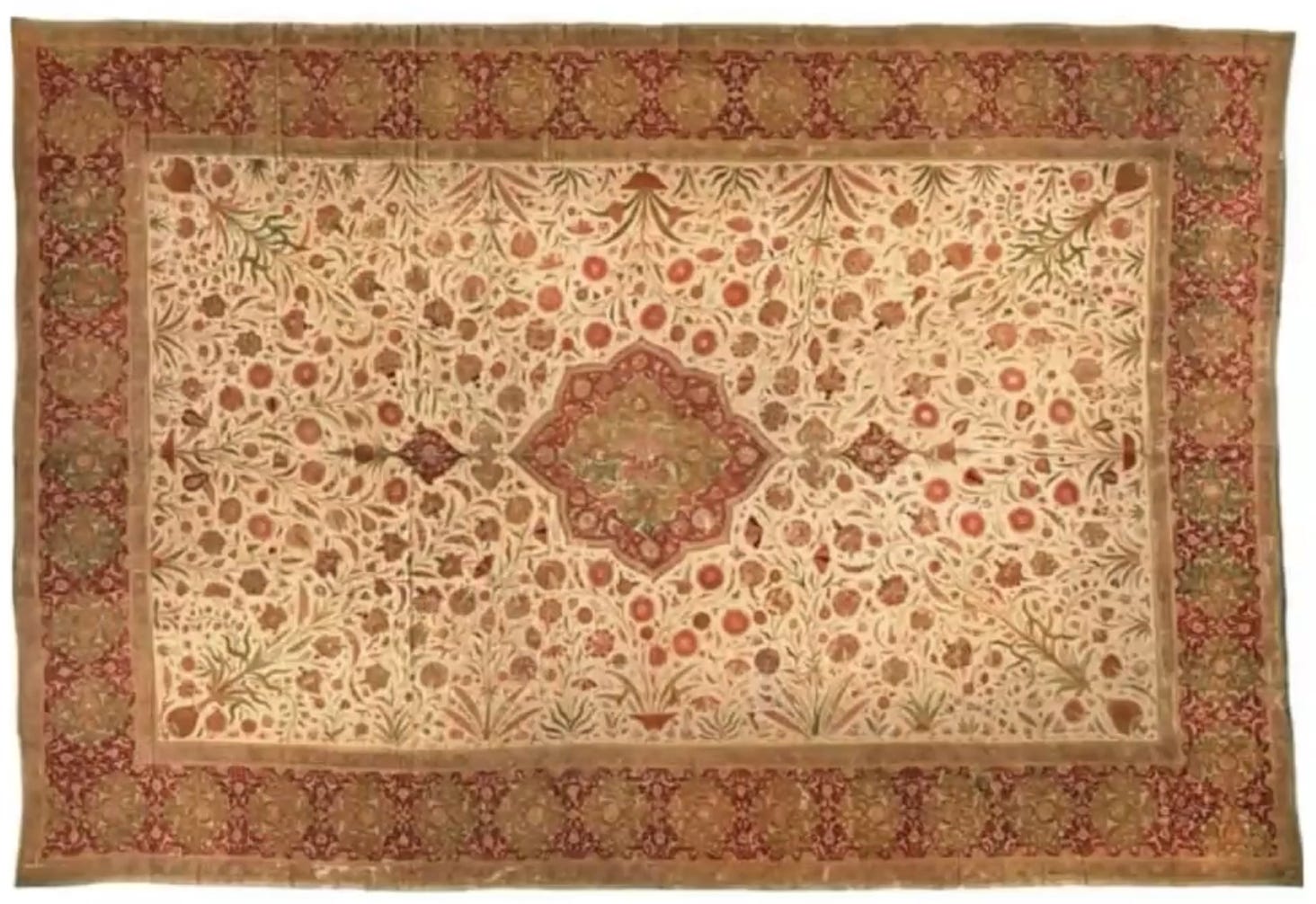
This month, I’m taking an online class about Indian textiles. I’m learning about the different varieties of cotton and how as always, the British ruined everything. I’m learning about the genius of Indian textile artisans, who made the finest fabrics in the world, like Dhaka muslim, which was said to be so light and finely woven, that you could pull an entire piece through a ring. I’m learning about resist dyeing techniques, where a design is painted onto a fabric using wax and then dyed. The wax keeps the dye from penetrating where the design has been painted, so you can then dye the fabric again after melting the wax off to get multiple colors.
I’m also reading the book, Silk: A History in Three Metamorphoses by Aarathi Prasad. It’s so interesting. The early chapters talk extensively about silkworms and their important role in being the primary subjects of study in early biology and taxonomical sciences. It also talks about the domestication of the silkworm. Human societies have been producing silk for over 5000 years!

I do like to see pictures of old Mugler runway shows, but I think there’s something far more interesting in knowing the techniques that created the clothes my ancestors wore. The world is much cooler when I know that the things we have today are all shaped by the care and skill and talent of people who really loved their craft and passed it down over many generations.
I’m excited to keep learning more about the true histories of our clothes. And I’m excited to keep telling y’all about it!
UPCOMING EVENTS
August 19
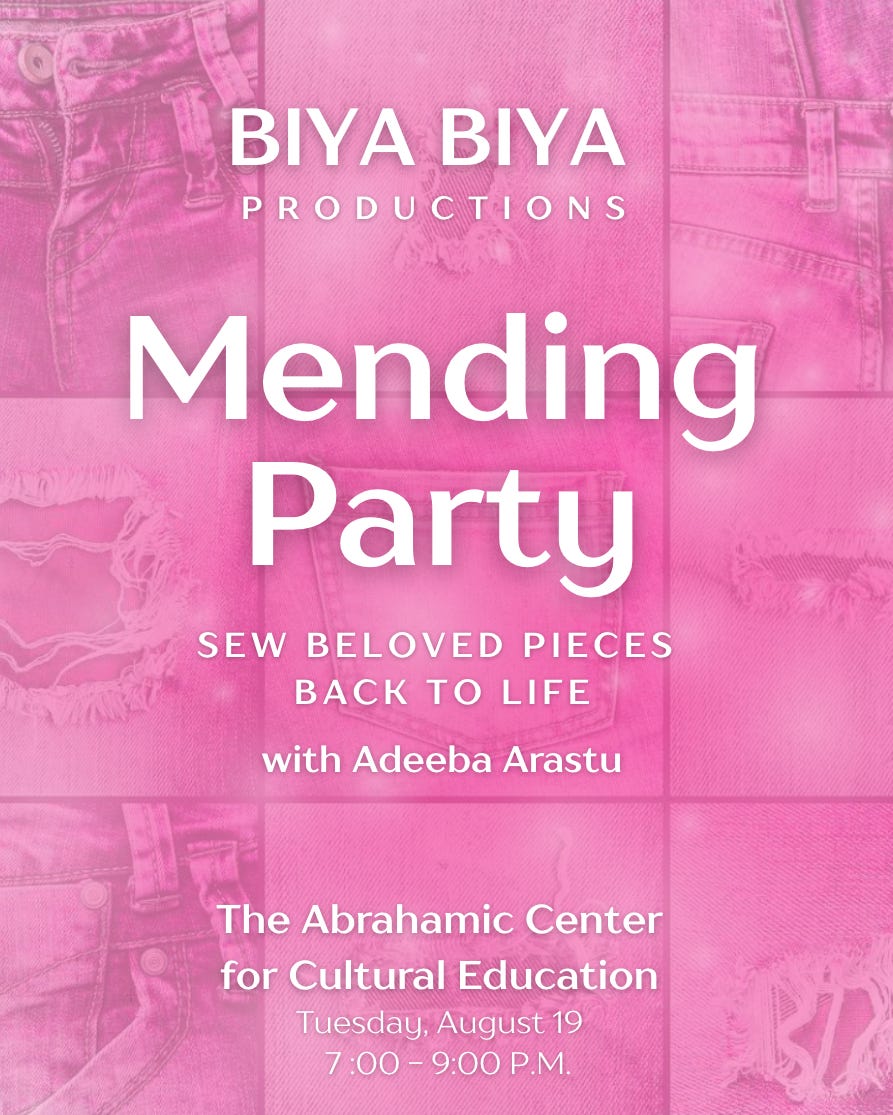
Mending Party with Biya Biya: Tickets $15-20 here
Abrahamic Center for Cultural Education, 55 W Van Buren St, Chicago, IL
Ripped your favorite top? Thick thighs wearing out your jeans? Bring your clothes that need a little love to learn how to mend them together! Extending the life of our clothes keeps them out of the 92 million tons of annual textile waste produced globally.
We will go through a brief overview of mending history and discuss different mending techniques. The rest of the time will be an opportunity for you to work on your project with the help of the facilitator and tutorial resources.
Hope to see you there!